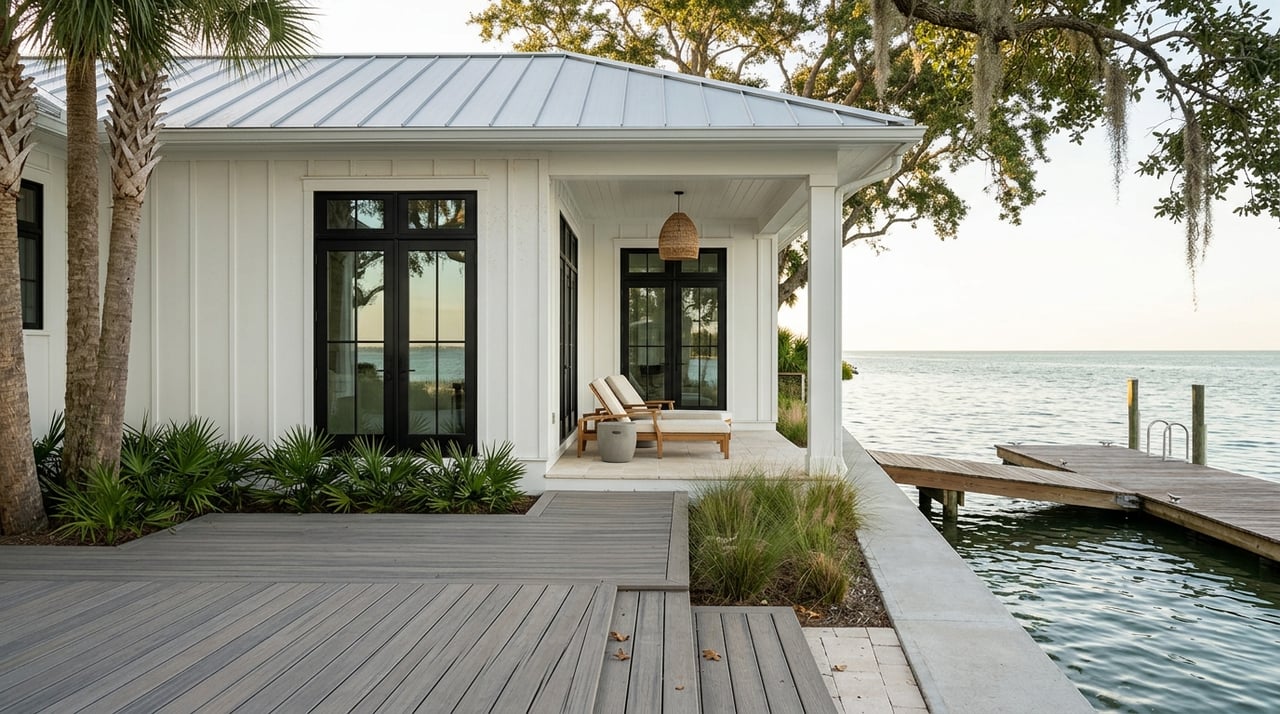
If you are drawn to coastal living but want more than a beach-town snapshot, Panama City deserves a closer look. This is a place where working waterfront access, older neighborhoods, and daily convenience come together in a way that feels rooted and livable. If you are thinking about a move, a second home, or an investment in Bay County, understanding what sets Panama City apart can help you make a more confident decision. Let’s dive in.
Panama City has a distinct identity
Panama City sits on St. Andrews Bay, and the city describes the bay as surrounding much of the community while supporting a protected harbor for the Port of Panama City complex. That setting shapes the city’s identity in a very practical way. Rather than feeling built only for visitors, Panama City functions as a year-round city with marinas, waterfront parks, arts, and civic infrastructure.
That matters if you are comparing locations along the Florida Panhandle. Panama City is not the same as Panama City Beach. Official materials present Panama City Beach as a separate beach-centered city focused on Gulf access, resorts, and beach activity, while Panama City is better understood as the bay-side city with downtown districts, historic areas, and resident-oriented amenities.
Census data also reinforces that difference. Panama City’s 2024 population estimate is 37,024, with a median household income of $61,125, a median owner-occupied home value of $243,200, and a median gross rent of $1,334. Those figures point to a housing profile that is more tied to local day-to-day living than a purely resort-driven market.
Historic character shows up in several areas
One of Panama City’s biggest strengths is that its character is not limited to a single block or waterfront strip. The city’s redevelopment framework centers on four CRA districts: Downtown, St. Andrews, Downtown North, and Millville. According to the city, those efforts focus on reducing blight, improving infrastructure, supporting economic growth, improving walkability, and assisting with affordable housing.
For buyers, that means historic charm here is paired with visible civic investment. You are not just looking at older homes or longtime business districts. You are seeing neighborhoods that continue to evolve with infrastructure work, public improvements, and preservation-minded planning.
Downtown Panama City
Downtown’s history is deeply connected to the waterfront. City materials note that the area was once known as Harrison and briefly Park Resort before being renamed Panama City in 1906. Early growth centered on commercial shipping and public buildings, and over time the area expanded along Harrison Avenue.
Today, Downtown carries that layered identity forward. It is historic, but it is also active. Streetscape improvements and redevelopment efforts support a setting designed for shopping, dining, public events, and everyday use.
St. Andrews
St. Andrews is described by the city as a historic village by the bay, and that phrase fits the area’s appeal well. It offers a strong sense of place tied to waterfront access and local history. For many buyers, it is one of the clearest examples of Panama City’s blend of maritime character and neighborhood feel.
Millville and Glenwood
Millville dates back to the late 1800s before being annexed into Panama City in 1926. Glenwood is also part of the city’s neighborhood planning story, with official planning materials focused on complete neighborhoods, great streets, and resilient open spaces and infrastructure.
Panama City also highlights the Glenwood Historical District Sign Trail, a self-guided interpretive walk centered on African American history, community development, and resilience. Together, Millville and Glenwood show that Panama City’s story is broader than a downtown core. It is a patchwork of places with distinct identities and local significance.
Waterfront access is part of daily life
In some coastal markets, water is something you visit on the weekend. In Panama City, it is woven into how the city functions. The city lists two public marinas: St. Andrews Marina in the historic St. Andrews district and Downtown Marina along Harrison Avenue.
These are not small details for people who value a waterfront lifestyle. The city also notes multiple public boat ramps and waterfront parks, which broadens access beyond private dock ownership. Whether you enjoy boating, fishing, walking by the water, or simply living near an active bayfront setting, that public access adds real value.
The Downtown Marina continues to evolve
The Downtown Panama City Marina is more than a launch point for boats. The city says it also serves as a fishing spot and a venue for special events. That mix makes it a community asset as much as a boating feature.
As of April 2026, the city was still advancing a multi-phase redevelopment of the Downtown Marina. The reported concept includes boat slips, parking, sidewalks, green space, lighting, utilities, and stormwater systems, with strong public support for a people-first waterfront. If you are looking at long-term value, that kind of planning can matter because it shapes how the waterfront functions for residents over time.
Everyday living goes beyond the water
Panama City’s appeal is not only about views and marinas. It also works as a full-time residential hub because the basics of daily life are in place. For relocation buyers, that can be just as important as charm.
The city uses Bayway transit, which connects Panama City with Callaway, Lynn Haven, Mexico Beach, Panama City Beach, Parker, Springfield, and other Bay County areas. For regional travel, Northwest Florida Beaches International Airport is only minutes from downtown according to the city and is served by American, Delta, Southwest, and United. That adds a level of convenience for commuters, frequent travelers, and second-home owners.
Healthcare access is another important part of the picture. Ascension Sacred Heart Bay in Panama City provides specialty care, 24/7 emergency care, and a Level II Trauma Center. For many buyers, especially those relocating from out of the area, access to medical services is a major part of evaluating where to live.
Arts, dining, and recreation add texture
Panama City also offers more cultural depth than many people expect at first glance. City materials describe a growing public art scene anchored by the Mural Trail, the Center for the Arts downtown, monthly symphony concerts, museums, galleries, and arts collectives. The Mural Trail stretches from St. Andrews through Downtown to Millville and includes more than 15 exhibits.
That kind of cultural network helps connect different parts of the city. It also gives residents reasons to explore beyond their immediate neighborhood. If you value a place that feels active without being overly hectic, this can be part of Panama City’s appeal.
Dining and street life also benefit from the city’s pedestrian-focused direction. The Planning & Zoning Division reviews outdoor dining applications, and the Harrison Avenue streetscape completion announcement pointed to a downtown ready for shopping, dining, and festive events. In practical terms, that suggests a downtown environment built for regular use, not just occasional festivals.
Recreation fills in the rest of the picture. The city cites trails, playgrounds, courts, fields, a dog park, a disc golf course, a skate park, and an upcoming recreation center. When you put that together with waterfront parks and marina access, Panama City reads as a city designed for everyday living as much as scenic living.
What this means for buyers
If you are considering Panama City, it helps to view the market through a local-resident lens. This is not simply an alternative to Panama City Beach. It is a bay-front city with historic districts, civic investment, public waterfront access, and the kind of services that support life year-round.
That creates several potential advantages depending on your goals:
- For relocation buyers: you may appreciate the balance of neighborhood identity, transportation access, healthcare, and public amenities.
- For lifestyle buyers: you can find a setting shaped by marinas, parks, downtown activity, and bay access rather than only Gulf-front tourism.
- For investment-minded buyers: the city’s redevelopment efforts and people-first waterfront planning may be worth watching as part of the long-term story.
The key is knowing which part of Panama City best matches the lifestyle you want. Some buyers are drawn to the historic feel of St. Andrews. Others want the downtown waterfront, or a neighborhood with a longer residential history like Millville or Glenwood. Having clear local context can make those choices much easier.
Why local guidance matters here
Panama City rewards a more thoughtful home search. Two properties may both offer access to the bay lifestyle, yet feel very different based on neighborhood identity, proximity to downtown, marina access, or the surrounding street pattern. That is where local perspective becomes especially valuable.
A boutique, relationship-driven approach can help you cut through broad assumptions and focus on the details that shape your experience. If you are weighing Panama City against Panama City Beach or other Bay County communities, careful guidance can help you compare tradeoffs with more clarity and confidence.
If you are exploring Panama City and want a refined, local perspective on its neighborhoods, waterfront opportunities, and lifestyle fit, connect with Gillman Group Realty for tailored guidance.
FAQs
How is Panama City different from Panama City Beach?
- Panama City is the bay-front city on St. Andrews Bay with historic districts, marinas, downtown infrastructure, and year-round residential amenities, while Panama City Beach is a separate city centered more on Gulf beaches, resorts, and beach activity.
Which Panama City areas have the most historic character?
- City materials most clearly point to Downtown, St. Andrews, Millville, and Glenwood as areas tied to Panama City’s historic character, redevelopment planning, and neighborhood identity.
Does Panama City offer strong public waterfront access?
- Yes. The city lists two public marinas, multiple public boat ramps, waterfront parks, and an active redevelopment effort at the Downtown Marina.
What supports full-time living in Panama City?
- Panama City offers Bayway transit connections, a nearby airport, hospital and trauma care, arts programming, downtown dining and shopping areas, and a range of city recreation amenities.
Is Panama City mainly a visitor market?
- Official city materials and Census figures support Panama City as a full-time residential hub with a local-neighborhood and civic-services profile, rather than a market centered only on visitors.